Quality is our Quest Excellence our Ethos
Since 2011, the Internal Quality Assurance Cell (IQAC) has served as the strategic conscience of our institution, dedicated to a visionary trajectory of Quality Sustenance, Strengthening, and Scaling (QSs). Grounded in the foundational pillars of Excellence, Ethics, and Empowerment, the Cell harmonizes diverse stakeholder perspectives to embed universal values and social responsibility into the heart of our academic discourse. We perceive institutional excellence not as a static benchmark, but as a dynamic cycle of Reflection, Renewal, and Reinvention, driven by robust Faculty Development and capacity-building initiatives that catalyze pedagogical innovation.
As Co-ordinator, I view the IQAC as far more than an administrative mechanism;it is a vibrant lighthouse of learning that illuminates our collective path toward academic distinction and ethical leadership. By fostering a culture of continuous improvement, we empower our community to transcend traditional boundaries and achievesustainable growth. Together, wemovebeyondthestandardofcompliance toward a higher calling of institutional brilliance, remaining steadfast in our commitment to our guiding motto: “From Quality Assurance to Quality Ascendance.”
IQAC Quality Policy
Hindustan College of Arts & Science is dedicated to fostering a transformative educational ecosystemthat empowers students to become globally competent, self- reliant, and ethically grounded citizens. We are committed to the rigorous implementation of a Quality Management System (QMS) that proactively meets the evolving needs of society through academic integrity and the pursuit of institutional excellence.
In our pursuit of Quality Ascendance ,the IQAC identifies the following core objectives to drive institutional growth:
- Academic Prowess & Pedagogical Innovation: To champion academic excellence by cultivating a disciplined work culture and deploying learner- centric methodologies, supported by transparent and effective evaluation mechanisms.
- Empowerment through Holistic Development: To unlock and nurture the inherent potential of our students, with a specialized focus on the empowerment of women, through a robust integration of curricular, co- curricular, and extracurricular interventions
- Professional Readiness & Career Resilience: To bridge the industry- academia gap by providing specialized professional courses and skill-based training that ensure diverse career opportunities and sustainable employability.
- Ethical Leadership & Social Stewardship: To instill a profound sense of national duty and social responsibility through community-oriented service and value-based education.
- Continual Improvement & Systematic Excellence: To maintain a dynamic and well-planned Quality Management System, ensuring that every institutional process is subject to regular audit, reflection, and refinement in line with national and international benchmarks
Quality initiatives & Measures
- Continual Improvement & Systematic Excellence: To maintain a dynamicandwell-plannedQualityManagementSystem,ensuringthat every institutional process is subject to regular audit, reflection, and refinement in line with national and international benchmarks.
- A one-month intensive summer course is offered to provide students withhands-ontraininganddomain-specific practicalexposure beyond the regular curriculum.
- The institution has introduced a structured peer-teaching model by identifying advanced learners in each department and encouraging collaborative classroom learning.
- Student-centric soft skill development modules are designed and delivered based on the academic and socio-cultural profiles of learners.
- Faculty members are encouraged to engage students as co-authors in research publications, promoting scholarly activities beyond the prescribed syllabus
- An in-house professional counsellor is available to support students’ mental health, emotional well-being, and personal development.
- A professional skill development programme is implemented for first- year undergraduate students to prepare them for internships and on- the-job training opportunities.
- Entrepreneurship training programmes are conducted for final-year undergraduate students to promote self-employability and business start-up initiatives.
- Democratic leadership and participatory governance among students are strengthened through the introduction of a student cabinet system in place of the traditional student council.
- Faculty members are motivated and supported to apply for major and minor research projects aligned with their areas of specialization.
- Enhanced infrastructure and exposure to global academic opportunities have contributed to strengthening the institution’s research culture
- Extension and outreach activities are focused on improving educational access and social awareness among economically disadvantaged sections of society.
- Quality assurance mechanisms ensure continuous review and enhancement of teaching-learning practices across departments.
- Environmental sustainability is promoted through regular carbon emission checks for major equipment such as generators and high- capacity air conditioners.
- Students and staff are encouraged to obtain emission checkcertificates for their vehicles, ensuring effective control of carbon emissions and environmental responsibility
Quality Measures in Teaching
- The institution has implemented systematic quality measures to strengthen the teaching–learning process and ensure academic effectiveness
- Structured lesson plans are prepared by faculty members for each course. These plans provide a written description of the subject taught and clearly outlinethecoursetitle,learningobjectives,schedule,durationofsessions, and modes of assessment, ensuring uniformity and outcome-oriented instruction.
- Faculty members develop Teacher’s Manuals and Course Portfolios for every subject offered. These documents concisely present the core components of the course,including syllabus coverage,teachingstrategies, learning resources, assessment tools, and expected learning outcomes, thereby supporting effective curriculum delivery.
- Boards of Studies (BoS) meetings are conducted at regular intervals to advise the Academic Board on all academic matters related to the design, development,implementation,andrevision of academic programmes.These meetings facilitate academic rigor, relevance, and continuous curriculum enhancement.
- To promote innovative pedagogy and effective evaluation practices, the institution regularly organizes workshops and Faculty Development Programmes(FDPs)focused on learner-centric teaching methodologies,use of ICT in classrooms, outcome-based education, and contemporary assessment techniques.
Quality measures in Administrative Activities
- Administrative infrastructure
- Governance
- Administrative staffing structure
- Technical infrastructure
- Admission procedures
- Examination arrangements
- Student record systems
- Graduation arrangements
- Transcript designand production
- Publicity and marketing arrangements
- Communication systems
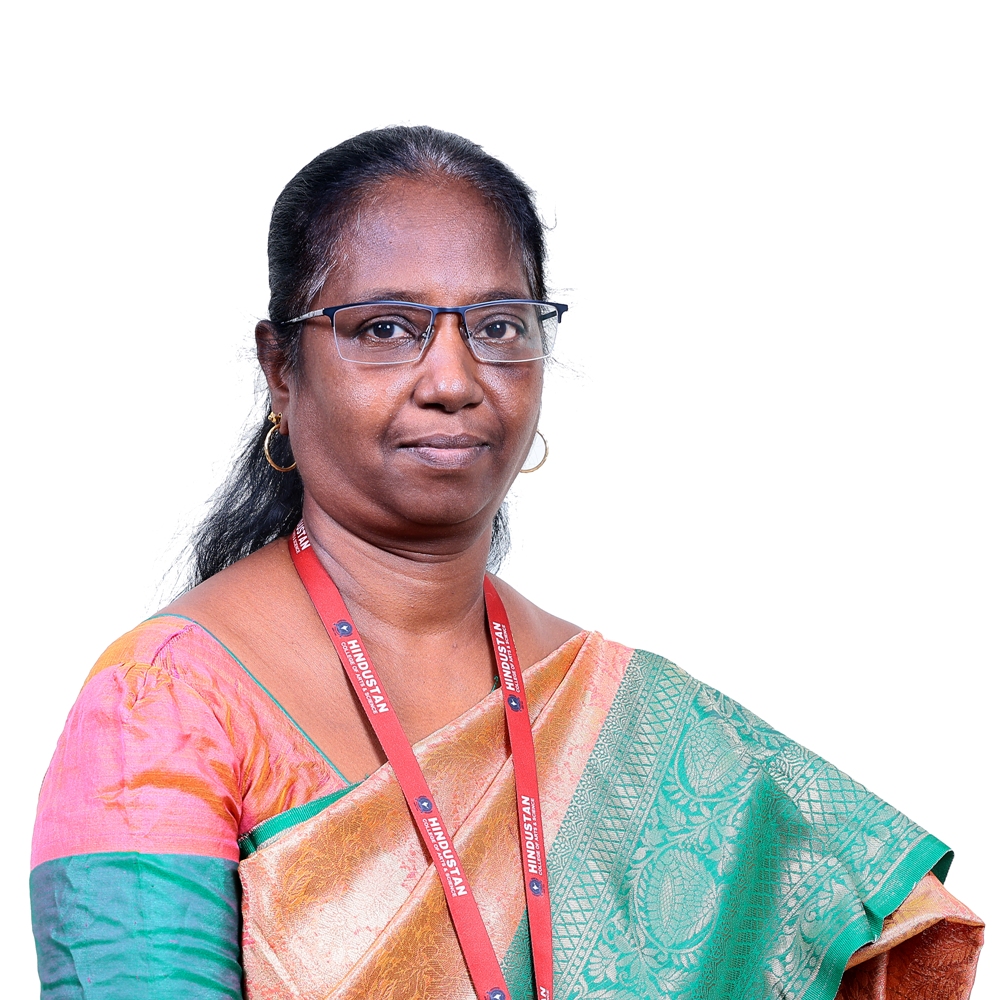
Dr. L. ESTHER THAMARINE
Internal Quality Assurance Cell (IQAC) is playing a major role in designing and maintaining quality assurance within academic systems. They frame the policy for the academic and administrative growth of the institution.
Committee Members
| Members | Name | Designation | |
|---|---|---|---|
| Chairperson | Dr.D.Uthira | Principal | |
| Co-ordinator | Dr.L.EstherThamarine | Dean,School of Business studies | |
| Core Committee | Dr.K.Malarvizhi | Vice Principal(Academics &Research) | |
| Core Committee | Dr.ElizabethRani | Dean, School of Life Sciences & Media | |
| Core Committee | Dr.R.SakthiPrabha | Dean,School of Humanities | |
| Core Committee | Dr.S.Alagu | Dean,School of Computational Studies | |
| Core Committee | Mr.M.Karthik | Head,Departmentof Mathematics | |
| Executive Members | Dr.R.Anuradha | Head,Department of BM&CS | |
| Executive Members | Dr.S.SenthamizSelvi | Head,Department of Commerce–ShiftI | |
| Executive Members | Dr.M.Amirtha | Head,Department of Psychology | |
| Executive Members | Dr.T.Srinivasan | Head,PG Department of Microbiology | |
| Executive Members | Dr.R.JayaSuji | Head,Department of Computer Science | |
| Executive Members | Dr.P.Manivannan | Head, Department of Commerce–ShiftII | |
| Executive Members | Dr.M.Thenkarai Maharaja pillai | Head,Department of Languages | |
| Mrs.B.Saranya | Head,Department of Visual communication | |
| Executive Members | Mrs.PriyaGrace | Assistant Professor, Department of Microbiology | |
| Executive Members | Mrs.S.Ilakkiah | Head, Department of English | |
| Senior Administrative Officers | Dr.L.Krishnasamy | Dean,Administrative | |
| Senior Administrative Officers | Mr.T.M.Ramesh | HR Administrator | |
| Students & Alumni Representative | Mrs.A.HepcyPrasanna | Alumni | |
| Students & Alumni Representative | ElayarajaS | President,StudentCouncil |