
The Difference between Special Effects and Visual Effects
The Difference between Special Effects and Visual Effects
Ever wondered how filmmakers make explosions, rain, fire, and even impossible worlds look so real? The answer often lies in two powerful filmmaking techniques: Special Effects (SFX) and Visual Effects (VFX). While these terms are often used interchangeably, they represent two different approaches to creating visuals.
What Are Special Effects (SFX)?
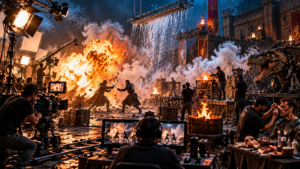
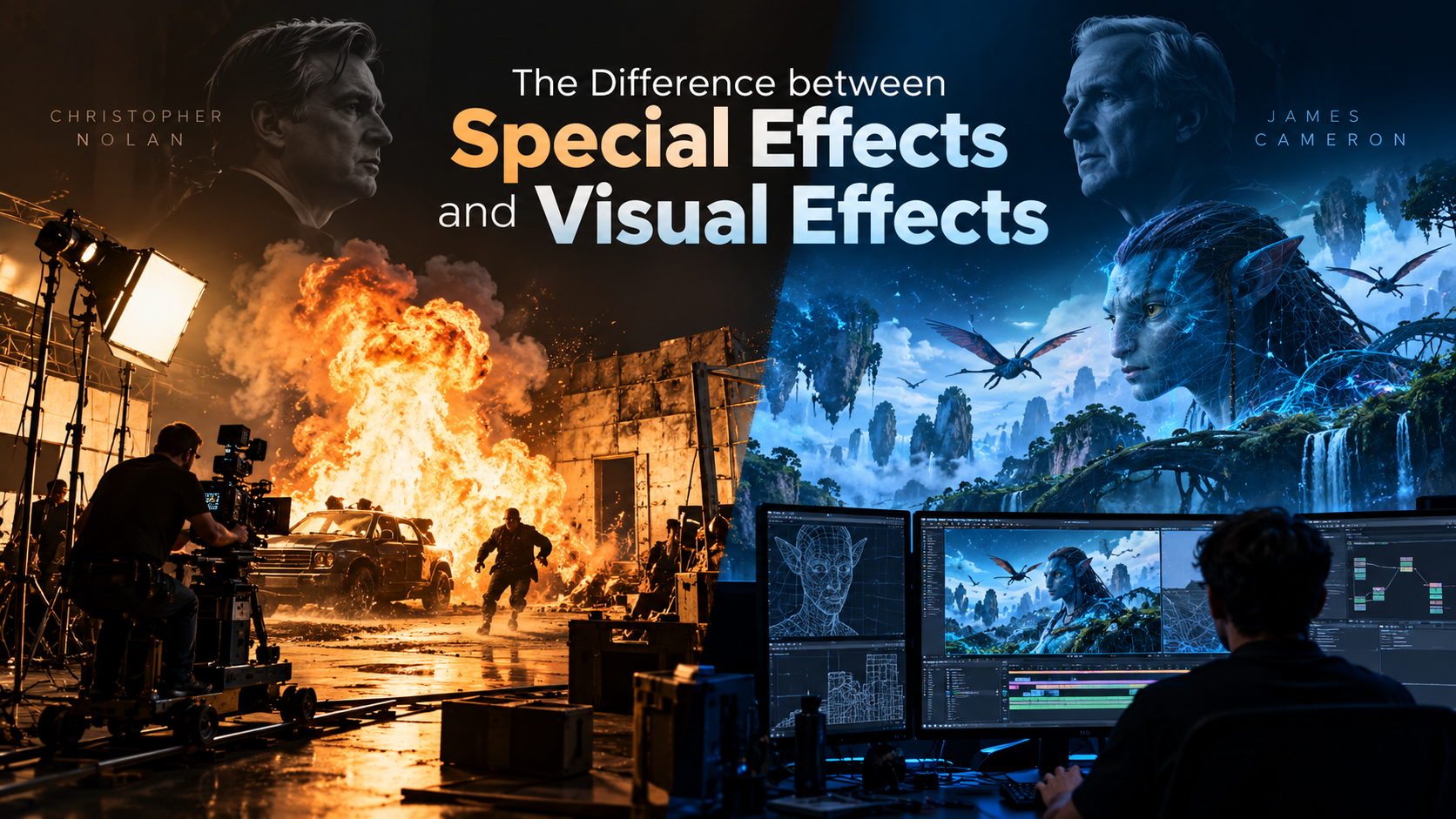
Special Effects, or SFX, are physical effects created and captured during filming. They are practical effects made using tangible objects, materials, equipment, and techniques on a film or television set.
Common examples include explosions, fake rain and snow, smoke, fire, wind, stage blood, makeup effects, animatronics, miniatures, and movie props. These effects provide actors with realistic visual and tactile experiences, helping them perform naturally within a scene.
What Are Visual Effects (VFX)?

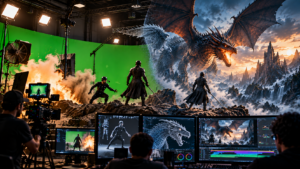
Visual Effects, or VFX, are digital effects added or enhanced during post-production. VFX uses computer graphics and digital tools to create or modify imagery that may be difficult or impossible to capture during filming.
Techniques such as green screen, blue screen, motion capture, video editing, and computer-generated imagery (CGI) are commonly used. VFX is particularly important in science-fiction and fantasy films, where filmmakers need to create imaginary environments, creatures, objects, and entire worlds.
Christopher Nolan vs James Cameron
A simple way to remember the difference is to think of Christopher Nolan for practical filmmaking and James Cameron for digital visual effects. Nolan is widely associated with practical effects and real-world filmmaking, while Cameron has consistently pushed the boundaries of digital filmmaking and visual-effects technology.
However, modern filmmaking rarely depends on just one technique. SFX and VFX are often combined to create more convincing visuals. For example, a practical explosion filmed on set can be enhanced digitally with additional fire, smoke, sparks, or debris.
Why Are SFX and VFX Important?
Today, SFX and VFX are essential across films, television shows, commercials, music videos, web content, and digital media. They help creators make visuals more realistic, imaginative, engaging, and compelling.
For Visual Communication students, understanding both techniques provides a strong foundation in filmmaking, photography, animation, and video production. Practical experience with cameras and production equipment, along with knowledge of editing and VFX software, can also open opportunities in advertising, animation, filmmaking, and video editing.
Ultimately, SFX and VFX are distinct but complementary tools. Together, they allow visual effects artists and filmmakers to turn creative ideas into believable and engaging visual experiences.
Dr. Saranya B
Head, Visual Communication
tag:
Digital Marketing Film Production Filmmaking SFX SFX vs VFX Special Effects VFX Visual Communication Visual Communication Students Visual EffectsShare:

Digital Marketing