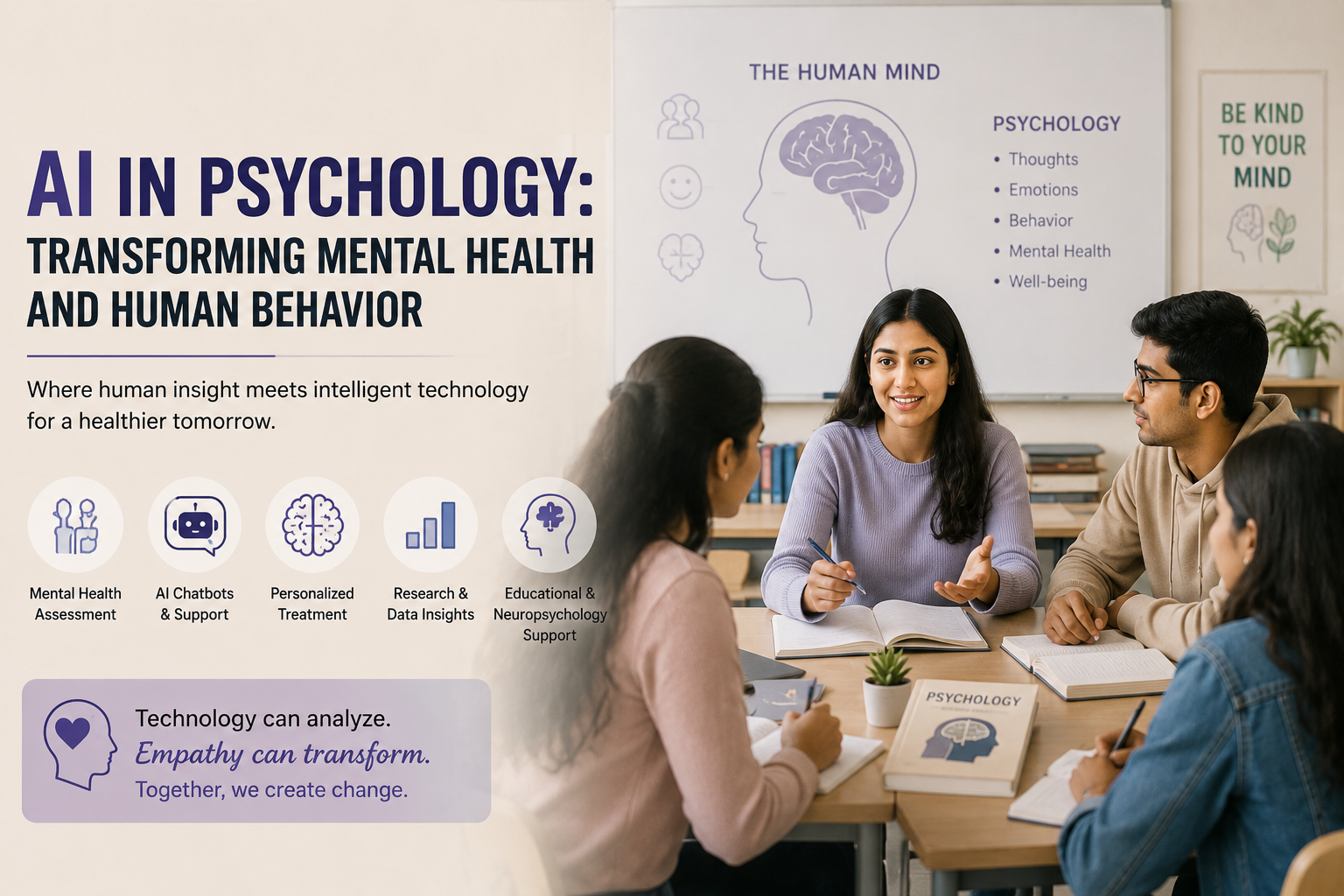

AI in Psychology: Transforming mental health and human behavior

When Psychology Meets Artificial Intelligence
What if technology could help identify mental health concerns earlier, personalize treatment, and support psychologists in understanding human behavior more effectively? This is no longer a future possibility it’s happening today.
Artificial Intelligence (AI) is transforming industries across the world, and Psychology is one of the fields experiencing remarkable innovation. By combining psychological knowledge with advanced technologies, AI is helping improve mental health support, research, and behavioral analysis. While AI cannot replace the empathy, compassion, and ethical judgment of trained psychologists, it serves as a valuable tool that enhances psychological practice and improves access to mental health care.
How AI Is Transforming Psychology:
1. Early Mental Health Assessment
AI-powered tools can analyze behavioral patterns, speech, and digital interactions to identify early signs of anxiety, depression, stress, and other psychological concerns. Early detection allows individuals to seek timely support and intervention.
2. AI Chatbots and Digital Mental Health Support
AI-based chatbots are providing accessible mental health resources by offering emotional support, mood tracking, guided self-help exercises, and wellness recommendations. These tools can encourage individuals to take proactive steps toward better mental well-being.
3. Personalized Psychological Care
Every individual experience mental health differently. AI helps psychologists analyze data to understand individual needs and support more personalized treatment plans, making interventions more effective and meaningful.
4. Advancing Psychological Research
Psychology researchers often work with large amounts of behavioral and clinical data. AI can process this information quickly, helping researchers identify patterns, improve accuracy, and gain deeper insights into human thoughts, emotions, and behavior.
5. Supporting Educational and Neuropsychology
AI is also contributing to educational assessments, cognitive development studies, and neuropsychological research by assisting professionals in understanding learning abilities, memory, and brain functions.
Benefits of AI in Psychology
The integration of AI into psychology offers several advantages:
a) Improved access to mental health resources
b) Early identification of psychological concerns
c) Personalized support and treatment approaches
d) Greater efficiency for psychologists and researchers
e) Data-driven insights into human behavior
Enhanced research and innovation in mental health
The Importance of Human Expertise
Although AI brings exciting opportunities, it also presents challenges related to privacy, ethics, and responsible use of technology. Mental health care requires empathy, trust, cultural understanding, and professional judgment—qualities that only human psychologists can provide.
Rather than replacing psychologists, AI is designed to support them by improving efficiency, enhancing research, and helping deliver better mental health services.
The Future of Psychology
As technology continues to evolve, Psychology is becoming an increasingly dynamic and future-focused field. Students who pursue Psychology today will have opportunities to work alongside emerging technologies while making a meaningful difference in people’s lives.
By combining scientific knowledge, critical thinking, and compassion, future psychologists can contribute to healthier individuals, stronger communities, and a better understanding of human behavior.
Conclusion
Artificial Intelligence is reshaping the future of Psychology by supporting mental health care, advancing research, and improving the understanding of human behavior. When used responsibly, AI has the potential to make psychological services more accessible, personalized, and effective.
The future of Psychology lies in the collaboration between human expertise and technological innovation, where AI serves as a powerful partner while psychologists continue to provide the empathy, ethical guidance, and human connection that remain at the heart of mental health care.

Ms. Pearlin Jesla. A,
Assistant Professor,
Department of Psychology
tag:
AI in Psychology Future of Psychology Human Behavior Mental Health Neuropsychology psychological practice psychologistsShare:

Jairaja HCAS