
Read, Scroll, Repeat: How Screens Are Changing the Way We Read

Are We Still Reading or Just Scrolling?

Digital reading habits are changing how students consume information, engage with literature and focus on what they read.
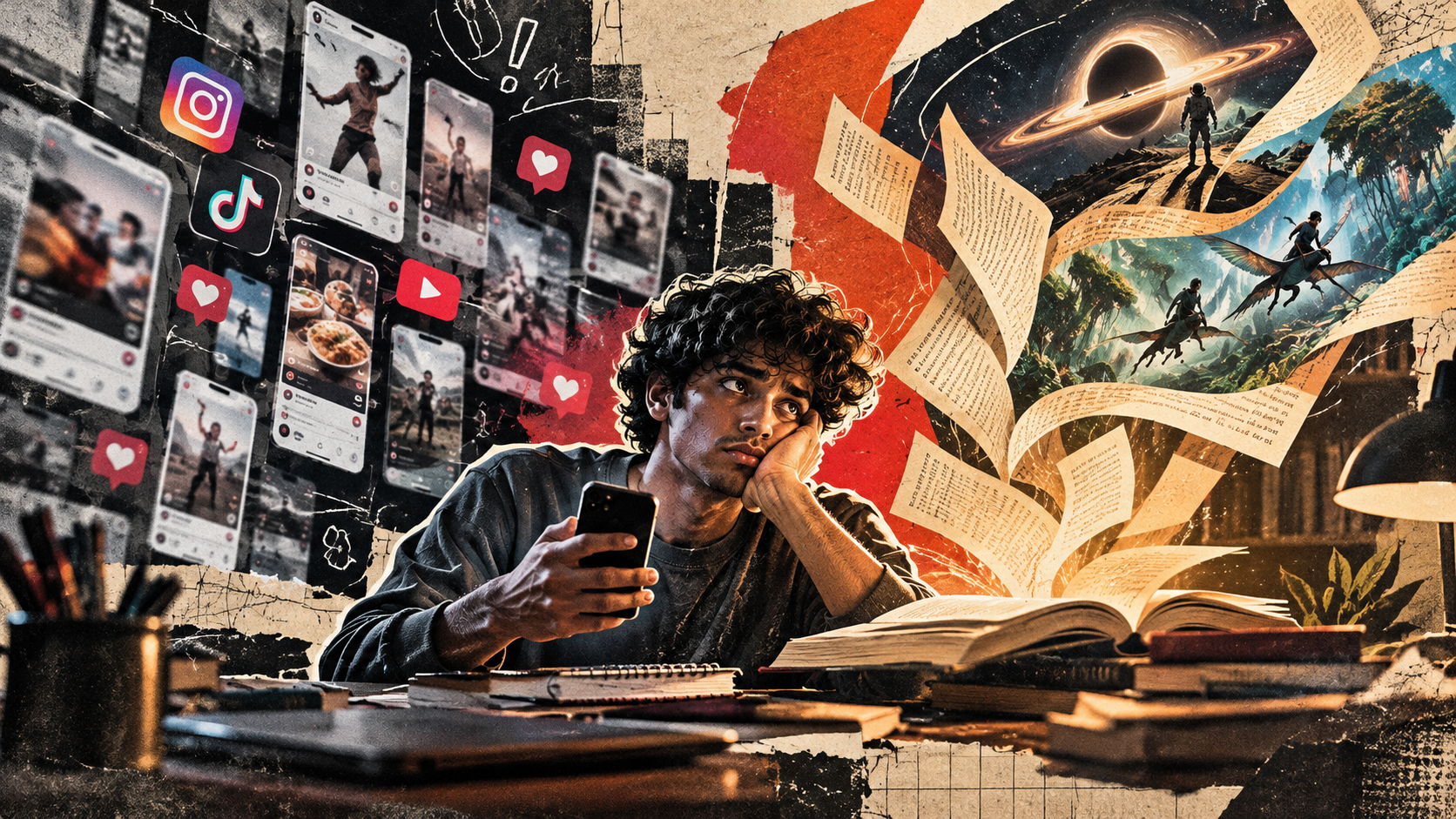
You can doom scroll through 100 Instagram posts in 10 minutes. But can you read 10 pages of a novel without checking your phone?
Reading has become part of almost everything we do online. We read messages, headlines, posts, articles and stories throughout the day. We probably read more words on a screen than we realise. Yet, the way we read is changing.
Screens have made reading faster and easier. We can move from e-books and online articles to news feeds, blogs and social media posts within seconds. There is always something new to read. But with so much competing for our attention, we often read in a hurry. We skim a paragraph, look for the main point and move on without exploring the ideas in depth.
The Difference Between Scrolling and Reading
Think about an ordinary college student. Thirty minutes of scrolling through Instagram can pass without a second thought. But reading five pages of a novel might feel like a challenge.
Why does scrolling feel effortless while reading a book demands attention?
Scrolling constantly offers something new. A reel leads to another reel, a post leads to another post, and there is always something waiting to capture our interest. A book, however, asks us to stay with one thought, follow an idea and imagine what comes next.
This does not mean screens have made us stop reading. They have simply changed our reading habits. The bigger question is whether we are giving what we read enough time and attention to understand it.
Why Literature Still Matters
Literature invites us to slow down and look beyond the words on a page. A poem may make us pause over a single line. A novel takes time to understand its characters, emotions and choices. A play brings different voices and perspectives together.
Reading literature is not simply about understanding words. It encourages us to question, interpret, imagine and connect ideas with our own experiences.
For instance, reading a novel is different from watching a short summary of its story. A summary may tell us what happened, but reading the novel allows us to experience the characters’ thoughts, understand their motivations and discover meanings for ourselves.
The difference is not just how much we read, but how deeply we engage with it.
Knowing When to Scroll and When to Stop
Perhaps the answer is not to choose between books and screens. Digital platforms provide quick access to information, online articles and e-books, while printed books offer their own reading experience. Both have their place in our lives.
What matters is learning to recognise when we need quick information and when a subject deserves our full attention. Put your phone aside while reading a chapter. Pause over a sentence that challenges you. Give an unfamiliar idea time to make sense.
The screen may change where we read, but it is still up to us to decide how deeply we read.
Because reading more words doesn’t always mean understanding more.
– Ms. Prakalya K.C
Assistant Professor, Department of English
tag:
Beyond the Classroom College Students Digital Distraction Digital Literacy Digital Reading Habits HCAS Hindustan College of Arts and Science Literature Reading Comprehension Reading Habits Screen Reading Social Media and Reading Student Focus Technology and EducationShare:

Digital Marketing